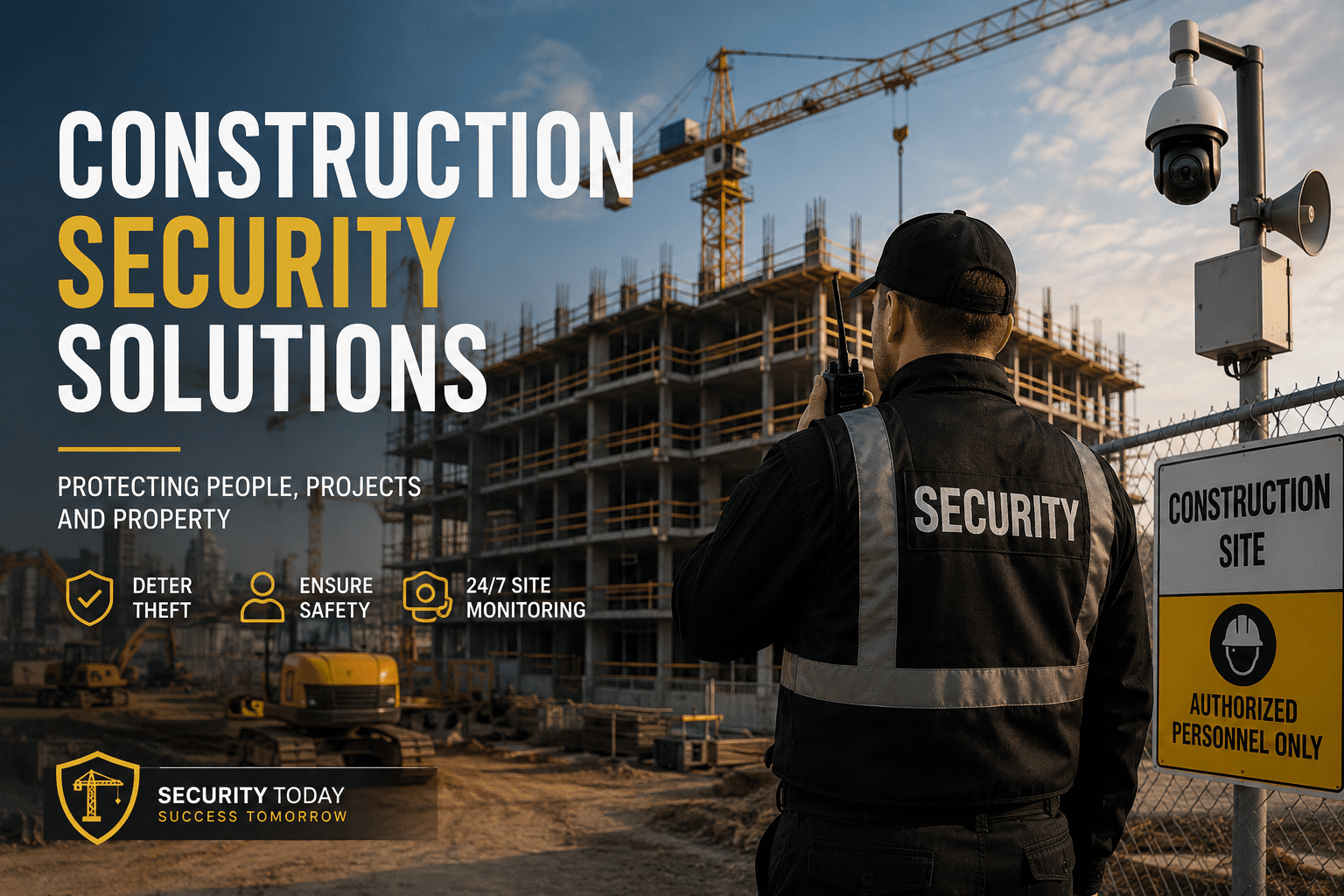
Construction sites are among the most vulnerable workplaces when it comes to theft, site intrusions, property damage, and potential safety hazards. Whether it is a residential, a commercial or a large industrial facility, construction companies face significant security challenges throughout every stage of a project that cause a worthwhile loss for businesses annually through stolen equipment, delayed schedules, increased insurance premiums, and project disruptions. The need for comprehensive construction security solutions continues to grow as construction projects become larger and more technologically advanced.
Why Construction Site Security Matters
Construction sites contain valuable assets that attract criminals and unauthorised individuals, as they can be easily sold quickly on secondary markets, making construction sites vulnerable to theft.
Poor site security can cause the following:
- Equipment theft
- Material theft
- Property lose
- Unauthorised occupation of land
- Workplace accidents
- Project delays
- Insurance claims
- Increased operational costs
- Damage to company reputation
Any single disaster may be enough in delaying operations for days or even weeks while replacement equipment is sourced and investigations are conducted; however, executing strong security measures helps organisations minimise these risks while improving overall site management.
Essential Construction Security Solutions
Modern construction security relies on multiple layers of protection working together.
Perimeter Security
The perimeter serves as the first line of defence.
Effective perimeter security measures include:
Security Fencing
Temporary fencing define site boundaries, deters unauthorised entry, Improve safety compliance and control access points
Popular fencing options are
- Knitted wire fencing
- Anti-climb Spikes
- Steel panel fencing
Security Gates
Controlled entry points allow management to monitor site access that maintains visitor tracking, vehicle monitoring, reduced unauthorized entry and improved workforce accountability
Warning Signage
Visible signage to inform individuals of active surveillance, restricted access and prohibited trespassing. Signs alone can deter many opportunistic criminals.
Video Surveillance Systems
Security cameras are among the most effective construction security solutions available today.
Benefits of Construction Site Surveillance
Video monitoring helps to deter criminal activity, record evidence, monitor operations, improve worker safety, verify incidents, reduce insurance disputes
Types of Surveillance Cameras
Fixed Cameras
Provide continuous monitoring of specific areas.
Ideal for entrances, material storage zones, equipment yards
PTZ Cameras
Pan-tilt-zoom cameras allow operators to, rotate viewing angles, zoom into incidents, monitor larger areas
Thermal Cameras
Thermal imaging detects heat signatures and performs effectively in darkness, fog, low-visibility conditions
Mobile Surveillance Trailers
These self-contained units often include cameras, lighting, communication systems and remote monitoring capabilities. They are especially useful for temporary construction projects.
Access Control Systems
Access control ensures only authorised individuals enter the site.
Key Features
Badge Systems
Workers receive identification badges to track, entry times, exit times, site attendance
Key Card Access
Electronic key cards provide secure access while creating digital records.
Mobile Credentials
Many organisations now use smartphone-based access systems for convenience, improved tracking, and faster management.
Biometric Access
Up-to-date biometric systems are used to recognise fingerprints, facial features and iris scanning for access, which provides high-security authentication.
Security Lighting
Criminal activity often increases after dark.
Proper lighting significantly improves construction site security by increasing visibility and reducing hiding places, better camera performance and improved worker safety
Common lighting options include:
- LED floodlights
- Motion-sensitive lighting
- Solar-powered security lights
- Portable tower lighting
Modern LED systems provide energy-efficient illumination for large areas.
Security Guards and Patrol Services
Technology is valuable, but human presence remains an important security component.
Advantages of Security Personnel
Security guards can:
- Respond to incidents immediately
- Verify suspicious activity
- Conduct patrols
- Enforce access policies
- Assist emergency responders
Construction companies often combine guards with surveillance technology for maximum effectiveness.
Mobile Patrols
Mobile patrol services conduct scheduled or random inspections.
Benefits include:
- Cost-effective protection
- Visible deterrence
- Rapid incident detection
Remote Monitoring Solutions
Remote monitoring has become increasingly popular across the construction industry.
How Remote Monitoring Works
Security professionals monitor live camera feeds from centralised control centres.
When suspicious activity is detected:
- Operators verify the threat.
- Audio warnings may be issued.
- Authorities can be contacted immediately.
- Incident recordings are preserved.
This approach provides continuous protection without requiring full-time on-site personnel.
Equipment Tracking and Asset Protection
Heavy equipment represents a major investment.
Modern asset tracking technology helps protect these valuable resources.
GPS Tracking Systems
GPS tracking provides:
- Real-time location data
- Movement alerts
- Recovery assistance
- Fleet management insights
Geofencing
Geofencing creates virtual boundaries.
Managers receive notifications when equipment:
- Leaves designated areas
- Moves during unauthorized hours
- Travels unexpectedly
Equipment Immobilization
Some systems allow equipment owners to:
- Disable machinery remotely
- Prevent unauthorized use
- Recover stolen assets more effectively
Inventory Management and Material Security
Material losses often occur gradually and go unnoticed.
Effective inventory management reduces these risks.
Best Practices
Secure Storage Areas
Use:
- Locked containers
- Storage sheds
- Security cages
Inventory Audits
Conduct routine inspections to:
- Verify stock levels
- Identify discrepancies
- Detect theft early
Digital Tracking
Inventory software can:
- Track material usage
- Monitor deliveries
- Improve accountability
Safety and Security Integration
Safety and security should work together rather than operate separately.
Integrated systems help organisations:
- Protect workers
- Improve emergency response
- Maintain compliance
- Reduce liability
Examples include:
- Emergency communication systems
- Visitor management platforms
- Incident reporting tools
- Worker tracking systems
Combining safety and security creates a more resilient jobsite environment.
Developing a Construction Site Security Plan
Every project has unique security requirements.
A comprehensive security plan should include:
Risk Assessment
Identify:
- Valuable assets
- Vulnerable locations
- Potential threats
- Historical incident patterns
Security Objectives
Define clear goals such as:
- Theft prevention
- Access control
- Worker safety
- Asset protection
Layered Security Measures
Use multiple solutions together, including:
- Fencing
- Cameras
- Lighting
- Access controls
- Security personnel
Incident Response Procedures
Establish protocols for:
- Theft
- Vandalism
- Emergencies
- Unauthorized access
Regular Reviews
Evaluate security effectiveness throughout the project lifecycle.
Emerging Trends in Construction Security
Technology continues to transform construction security.
- Artificial Intelligence Surveillance
- Drone Security Monitoring
- Smart Sensors
- Cloud-Based Security Platforms
These innovations help organisations improve protection while reducing operational costs.
Benefits of Investing in Construction Security Solutions
Organisations that prioritise security often experience the following:
- Reduced theft losses
- Lower insurance claims
- Improved worker safety
- Greater operational efficiency
- Better project continuity
- Increased stakeholder confidence
- Enhanced regulatory compliance
Security investments frequently pay for themselves through prevented losses and reduced project disruptions.
Conclusion
Organisations that invest in proactive security solutions position themselves for safer operations, reduced losses, improved productivity, and long-term business success and by implementing effective construction, security is not merely a protective measure; it is an essential component of successful project management.