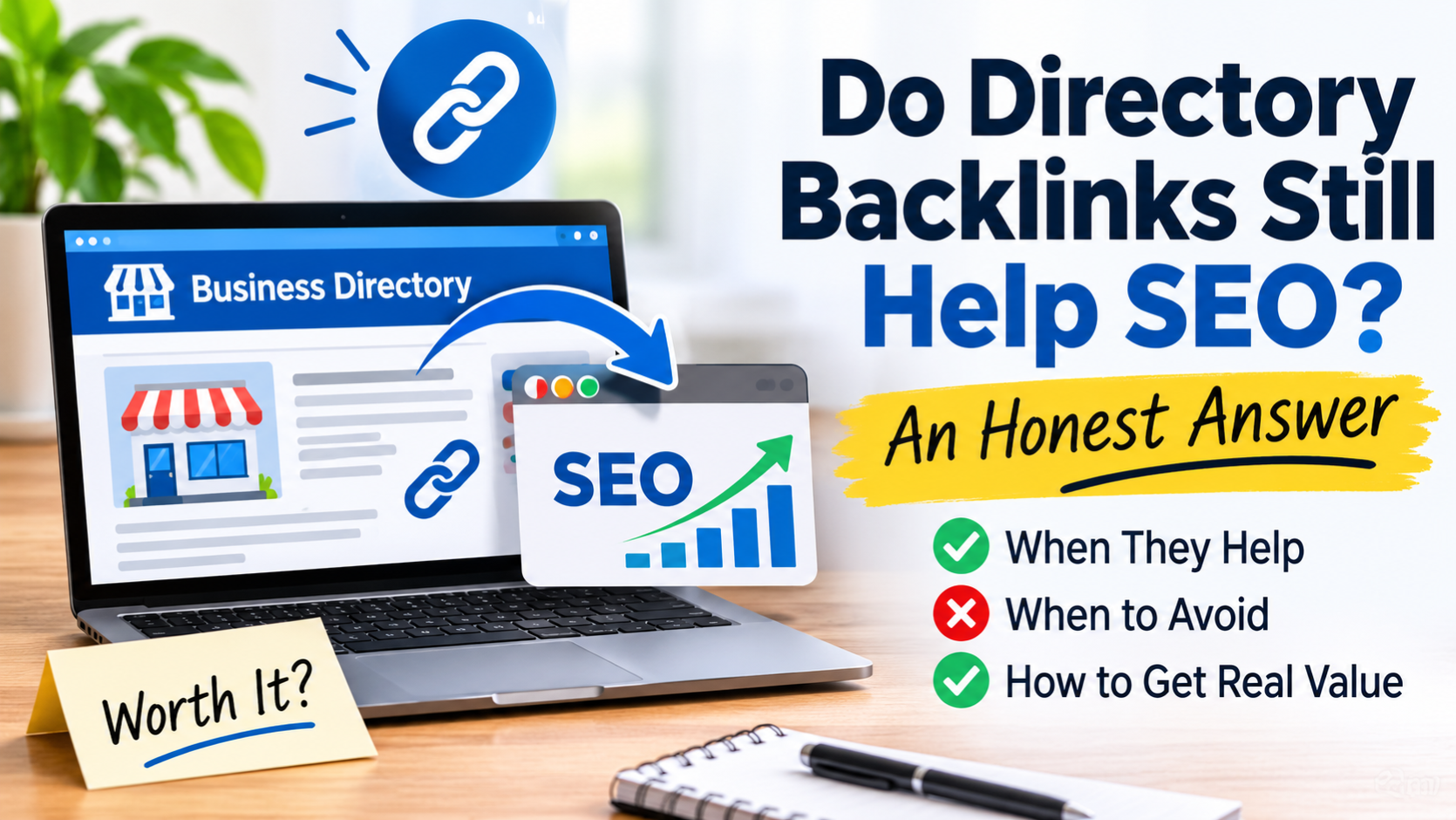
Do Directory Backlinks Still Work for SEO?
Some do. Most don’t. Directory backlinks still help when the directory is real, the listing is accurate, and the link sits on a page people actually visit. They stop helping when the directory exists only to sell links.
Here’s the honest version. A listing on a good directory won’t push you to page one by itself. But it can help people discover your business, bring relevant visitors to your website, and support the other SEO work you’re doing. It can also make your business information easier to find across the web. A listing on a low-quality directory usually offers little value. Building hundreds of them just to manipulate rankings can also create an unnatural link pattern that Google’s spam systems may ignore.
So the question isn’t “should I get directory links?” It’s “which ones are worth my time?” The rest of this article helps you answer that.
What Is a Directory Backlink and How Does It Work?
A directory is a website that lists businesses by category, industry, or location. When you add your business, you usually get a profile with your name, address, phone number, a short description, and a link back to your website. That link is the backlink.
A backlink is a link from another website to yours. Search engines can use links to discover pages and understand how websites relate to each other. However, not every backlink carries the same value. A link from a relevant, trusted website can be more useful than one from a directory nobody visits.
Directory listings can do two jobs. They can provide a backlink, and they can provide a business citation. A citation is a mention of your business name, address, and phone number (NAP) on another website, with or without a link.
For a local business, citations can help people find accurate business information across different platforms. They also give search engines more places to discover your business details. However, citations alone aren’t a guaranteed way to improve rankings. Focus on reputable platforms and accurate information rather than building as many listings as possible.
What Google Says About Directory Links
Google has been clear for years. Links created mainly to manipulate search rankings count as link spam. Its spam policies specifically list low-quality directory and bookmark site links as examples.
Google also uses an automated system called SpamBrain to identify unnatural links. In December 2022, Google announced an update that expanded SpamBrain’s ability to detect sites buying links and sites created to pass outgoing links. The purpose was to neutralize the ranking benefits of unnatural links.
This doesn’t mean every low-quality directory link automatically results in a penalty. Google’s systems can ignore or neutralize unnatural links, while serious violations can also lead to manual actions.
So Google isn’t against directories. It’s against low-quality directories and links created primarily to manipulate search results.
There’s a second side to this. For local search, Google says it ranks businesses mainly on relevance, distance, and prominence. Relevance is how well your business matches a search. Distance is how far your business is from the person searching. Prominence refers to how well-known your business is.
Google explains that prominence can be influenced by information from across the web, including links to your business and customer reviews. That’s one reason why building a genuine online presence matters for local businesses.
Put those two points together and you get a simple rule. A listing that helps real people find a relevant business is worth considering. A listing created only to plant a backlink isn’t.
Which Directories Still Help and Which Ones to Skip
You can tell a lot about a directory in two minutes. Here’s how the good ones and the junk ones usually look side by side.
| What to check | Worth your time | Skip it |
| Who runs it | A known brand, trade group, chamber of commerce, or local publisher | No clear ownership, contact information, or About page |
| Review process | Someone checks whether listings are genuine and relevant | Anyone can add anything instantly without moderation |
| Category fit | Built for your industry, trade, or location | Thousands of unrelated categories on one platform |
| Real visitors | People use it to find businesses and click through to websites | Pages stuffed with ads, with little sign of real use |
| Cost | Free, or transparent pricing for a genuine service | Sells bulk SEO link packages or promises rankings |
| The link | A natural link to your website or relevant service page | Requires keyword-stuffed anchor text or manipulative link exchanges |
A few kinds of listings are usually worth having:
- Your Google Business Profile and other major map and search platforms.
- Directories focused on your trade or industry.
- Your local chamber of commerce or business association.
- Curated local or regional directories that review the businesses they publish.
And a few are almost never worth the effort:
- Mass submission lists with hundreds of websites.
- Directories that exist mainly to sell backlinks.
- Sites that copy business listings from other directories without adding anything useful.
- Websites that promise ranking improvements in exchange for a fee.
The important thing is to look beyond a directory’s domain authority or other SEO metrics. Ask whether the platform has a real audience, relevant categories, useful business profiles, and a reason to exist beyond hosting links.
How to Get Real Value From a Directory Listing
A good listing takes a little care. Here’s the order that makes the most sense.
- Start with the big ones. Claim and complete your Google Business Profile before you touch anything else. Add your correct business category, address or service area, phone number, website, opening hours, and photos.
- Pick a short list of relevant directories. Look for platforms that fit your trade, industry, and service area. A handful of good listings beats a hundred weak ones.
- Keep your business information consistent. Use the same business name, address, and phone number wherever possible. Correct outdated details and major differences so customers can easily recognize and contact your business. Minor formatting differences, such as “St.” and “Street,” don’t automatically create an SEO problem, but accurate information is still important.
- Choose the closest category. Select the most relevant category the directory offers. Don’t choose several unrelated categories just to cover more ground.
- Write your own description. Explain what your business does, which services you offer, and who you help. Copying the same paragraph onto every directory makes your listings look alike and gives potential customers little useful information.
- Link to the right page. For most local businesses, that’s the homepage or the relevant service page. If the directory allows a link to a specific service, send visitors to a page that answers their questions.
- Add real business information. Include genuine photos, opening hours, services, and a working phone number. People often use directory profiles to decide whether to contact a business.
- Check your listings every few months. Update old addresses, phone numbers, and opening hours. Claim duplicate profiles where possible, correct outdated information, and close or remove listings when the platform allows it.
- Track the results. Check your website analytics, referral traffic, and available call or enquiry data. If a directory sends relevant visitors or customers, keep the listing up to date. If it brings no noticeable value, don’t keep spending time or money on it without a good reason.
One more thing. If a directory asks you to pay, ask what you’re getting. A reasonable fee for a genuine service, such as featured placement on a website people actually use, can make sense. However, paying specifically for followed links to manipulate rankings goes against Google’s link spam policies.
Google recommends qualifying paid links with rel=”sponsored” or rel=”nofollow”. The sponsored attribute is its preferred option for paid placements. A paid advertising listing can still be useful for visibility and customer enquiries without being treated as an ordinary editorial backlink.
Frequently Asked Questions About Directory Backlinks
Do directory backlinks still help SEO?
Some do. Links and listings from relevant, well-maintained directories can help people discover your business and support your online presence. A useful directory can also provide a relevant backlink. Links from low-quality directories usually offer little value, and Google specifically identifies low-quality directory links in its spam policies.
Can directory links hurt my site?
A few ordinary listings on weak directories are unlikely to sink your website. However, creating large numbers of low-quality links through automated submissions or other manipulative methods can become a link spam issue. Google’s systems can ignore or neutralize unnatural links, and serious violations may result in a manual action.
Are nofollow links worthless?
No. Google treats nofollow as a hint when deciding which links to consider or exclude in Search, rather than an absolute instruction. Even when a listing doesn’t provide direct ranking benefits, it can still send visitors to your website, increase business visibility, and help potential customers find your contact details.
How many directories should I join?
There’s no magic number. Choose directories that are relevant to your industry and service area, and prioritize the ones your potential customers might actually use. Once your important listings are complete and accurate, focus on other SEO activities instead of chasing hundreds of additional directories.
Is it okay to pay for a directory listing?
Yes, paying for a genuine advertising placement or featured listing can be worthwhile if the directory has a real audience and you understand what you’re paying for. However, paid links should be qualified with rel=”sponsored” or rel=”nofollow”. Be careful with websites that promise higher Google rankings or sell followed backlinks in bulk.
Should I submit to hundreds of directories at once?
No. Mass submissions usually produce weak listings, waste time, and can create unnatural link patterns. Google specifically identifies low-quality directory links and automated link-building schemes in its spam policies. A smaller number of relevant, well-maintained listings is a better approach.
Are Directory Backlinks Worth Building?
Directory backlinks aren’t dead, but they’re not a shortcut either. The ones worth having come from real directories, reach the right audience, point to a relevant page, and carry accurate information about a real business. Skip the rest.
Start with your Google Business Profile, add a few listings that fit your trade and your area, and keep them current. Then spend your time earning relevant mentions and links from industry websites, local organizations, business associations, and other sources that genuinely choose to reference your business.
If you run a business in the US, you can also add your listing to the free directory at Made to Build USA. It’s another place to showcase your business, share your services, and help potential customers discover what you offer.
Also Read our Latest Blog post related to this:
Benefits of Business Listing in SEO