The Bill You Never Ordered
It starts with an invoice. It’s for a few hundred dollars, and it’s for a listing in an online business directory. You don’t remember signing up. Maybe nobody did.
That’s the whole trick. The scammers count on a busy office assuming someone else ordered it, so the bill just gets paid. The FTC has warned small businesses, nonprofits, churches, and other organizations about this for years, and the scam hasn’t gone away.
This article shows how these scams work, what the warning signs look like, and what to do if one lands on your desk.
How the Scam Works
There are a few versions, but most follow the same path.
It often begins with a phone call. Someone says they’re calling to confirm or update your business listing. They only need your name and address, or a quick yes. An employee who wants to be helpful gives it out. That’s all they need.
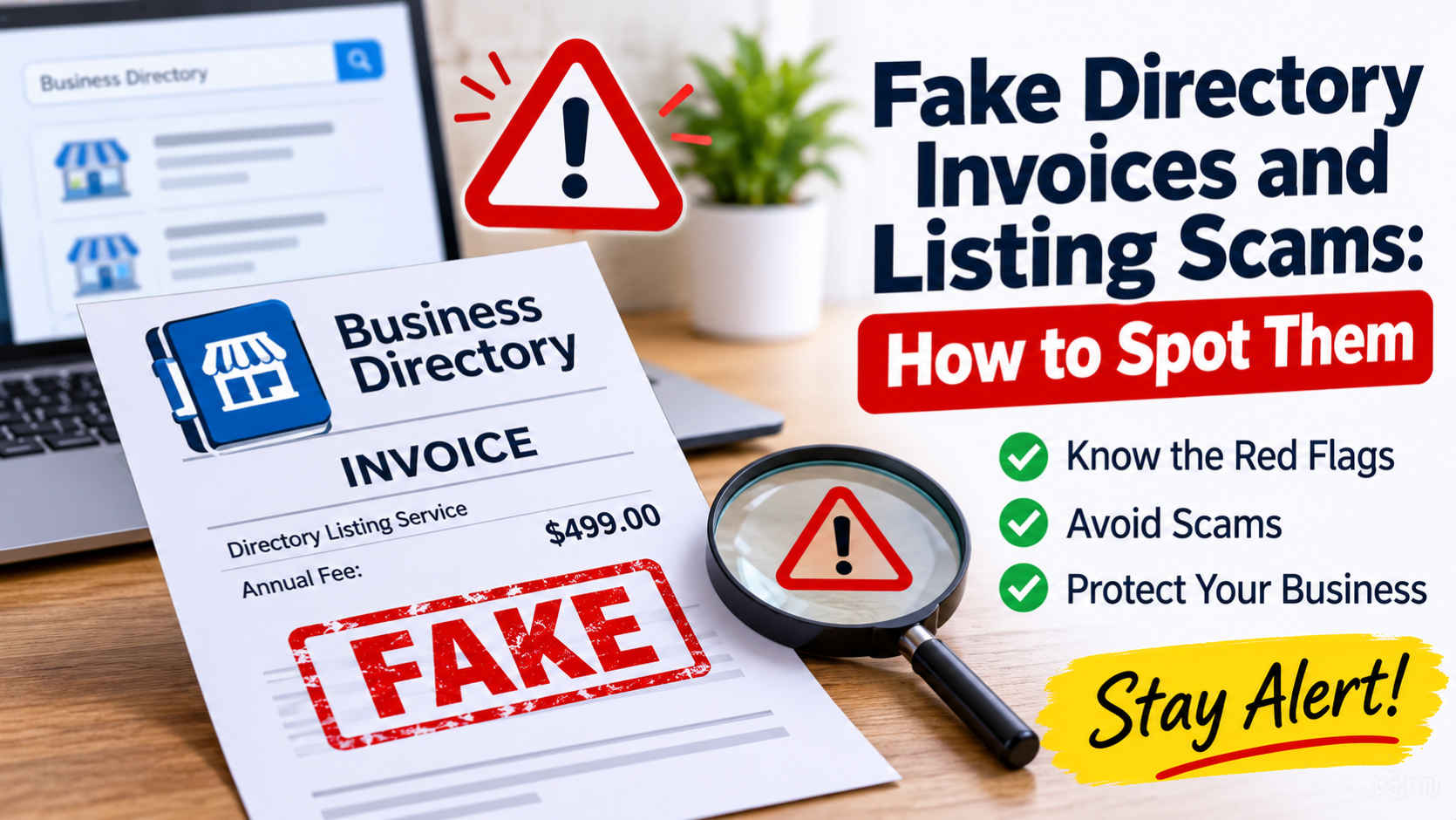
A few days later, an invoice shows up by mail, fax, or email. It names someone from your office and often includes a picture of how the listing would look. That makes it seem like somebody already agreed. The amounts in FTC cases have run into the hundreds of dollars for a one-year listing, and some bills have been higher.
If you don’t pay, the pressure goes up. You may get a second bill, then notices with words like “collection” or warnings about your credit. In some cases, scammers have used altered or edited recordings to make it sound like an employee said yes.
A few other twists to know about:
- A printed directory arrives with the invoice, so it feels like you got something for your money. The books are usually worthless and rarely get distributed.
- A small check arrives in the mail. If you cash it, the scammer may claim you agreed to a contract.
- Once you pay, your details can be passed to other scammers, and more bills may follow.
- The “directory” may not exist at all, or it may have almost no readers.
These scams don’t only target businesses. Churches, nonprofits, and other organizations get them too.
Red Flags to Check Before You Pay
Run any directory bill through this list. One yes should make you stop and check the invoice carefully. Two or more are strong reasons to investigate before paying.
- You don’t remember ordering it, and nobody on your team can say who did.
- The first contact was a call asking you to “verify” or “confirm” your details.
- The invoice shows up out of the blue and looks like an overdue bill, not an offer.
- It uses an employee’s name or a mock-up of a listing to make it seem like you agreed.
- There’s no contract, order form, or signed agreement to point to.
- The bill pushes you to pay fast, or threatens collections or your credit score.
- You’re asked to pay by wire transfer, reloadable card, or gift card. The FTC says these payment demands are warning signs of a scam.
- The company has no real website, no street address, or a mail-forwarding address.
- The directory is hard to find in search, and you can’t find anyone who uses it.
- A “free” listing offer turns into a bill later.
- A check arrives that you didn’t ask for. Cashing it may be used by the sender to claim that you agreed to a contract.
What to Do If You Got a Bill or Already Paid
If the invoice just arrived, slow down. You have time.
- Don’t pay it yet.
- Ask around. Check with whoever handles your orders and your bills to see if anyone really signed up for something.
- Look for paperwork. If there’s no order form, contract, or email showing you agreed, that’s a reason to question the bill.
- Contact the company yourself, using a phone number you have independently verified. Don’t rely only on the number on the invoice.
- Keep copies of the invoice, the envelope, any fax header, and notes from any calls.
- Don’t cash a check you didn’t expect until you’ve read every line on it.
- Report it. Go to ReportFraud.ftc.gov, and tell your state attorney general. If it came by mail, you can also contact the U.S. Postal Inspection Service.
- Tell your team. Make sure everyone who answers the phone or opens the mail knows about the scam.
The FTC has reported cases where scammers backed off after businesses challenged the invoices or complained. Some businesses have also received refunds.
If you already paid, call your bank or card company right away and tell them the charge was for something you never ordered. Ask what options you have to dispute the payment. Report it to the FTC too. Then watch for more invoices, since your details may now be on other scammers’ lists. Don’t pay those either without checking them.
How to Tell a Real Directory From a Scam
Most real directories work the opposite way. You find them, you sign up, and you know what you agreed to.
| Question | Real directory | Scam |
| How did you get listed? | You signed up, or you said yes to an offer you understood. | A call to “confirm” your info, then a bill. |
| What do you pay? | The price is clear before you commit, or the listing is free. | A surprise invoice for a listing you never ordered. |
| Can you find it? | It has a working site, real listings, and visitors. | It’s hard to find, or it doesn’t seem to exist. |
| Who’s behind it? | A named company with real contact information. | No clear owner, or a mail-forwarding address. |
| What happens if you say no? | Nothing. | Repeated bills and threats. |
Before you put money into any directory, look it up first. Search the name, read what others say, and check with the Better Business Bureau. The FTC suggests researching a directory before agreeing to pay for a listing.
Also remember that you don’t have to pay for a basic business listing. Many useful ones are free, including Google Business Profile.
Frequently Asked Questions
What is a directory listing scam?
It’s a scam where someone bills your business for a listing you never ordered. The directory is often worthless, and sometimes it doesn’t exist.
Why do these scammers ask me to “confirm” my information?
Because it works. Once someone gives a name or address, the scammer can use that information to bill the business and make it look like someone agreed.
Do I have to pay an invoice for a listing I didn’t order?
Don’t assume you have to pay an invoice just because it arrives. Check your records and ask the company for proof of the original order or agreement. If you didn’t authorize the service, dispute the invoice and keep a record of your communication.
What if the invoice lists one of my employees?
Scammers use real names to make the bill seem legit. Check with that person, but don’t assume it’s real because a name is on it.
Can they hurt my credit?
That’s a common threat. Don’t ignore a genuine collection notice or legal document, but don’t treat a threatening invoice as proof that you owe money. Keep your records and get legal advice if you receive a formal legal notice.
Where do I report a fake directory invoice?
Report it at ReportFraud.ftc.gov and tell your state attorney general. If it came by mail, the U.S. Postal Inspection Service also takes reports.
Is every paid directory a scam?
No. Plenty of real directories charge for featured spots or upgrades. The difference is that you chose it, you know the price, and the site has real visitors.
Protect Your Business From Directory Listing Scams
If a directory bill shows up and you never asked for it, treat it as suspicious until you can verify it. Don’t pay straight away. Check your records and report it if you believe it’s a scam.
Then take a minute to tell your team. These scams work because someone in the office says yes to a friendly call or pays a bill that looks routine.
When you do want a real listing, pick a directory you’ve checked out, know the price up front, and keep your own records. If you run a business in the US, you can add your listing to the free directory at Made to Build USA.